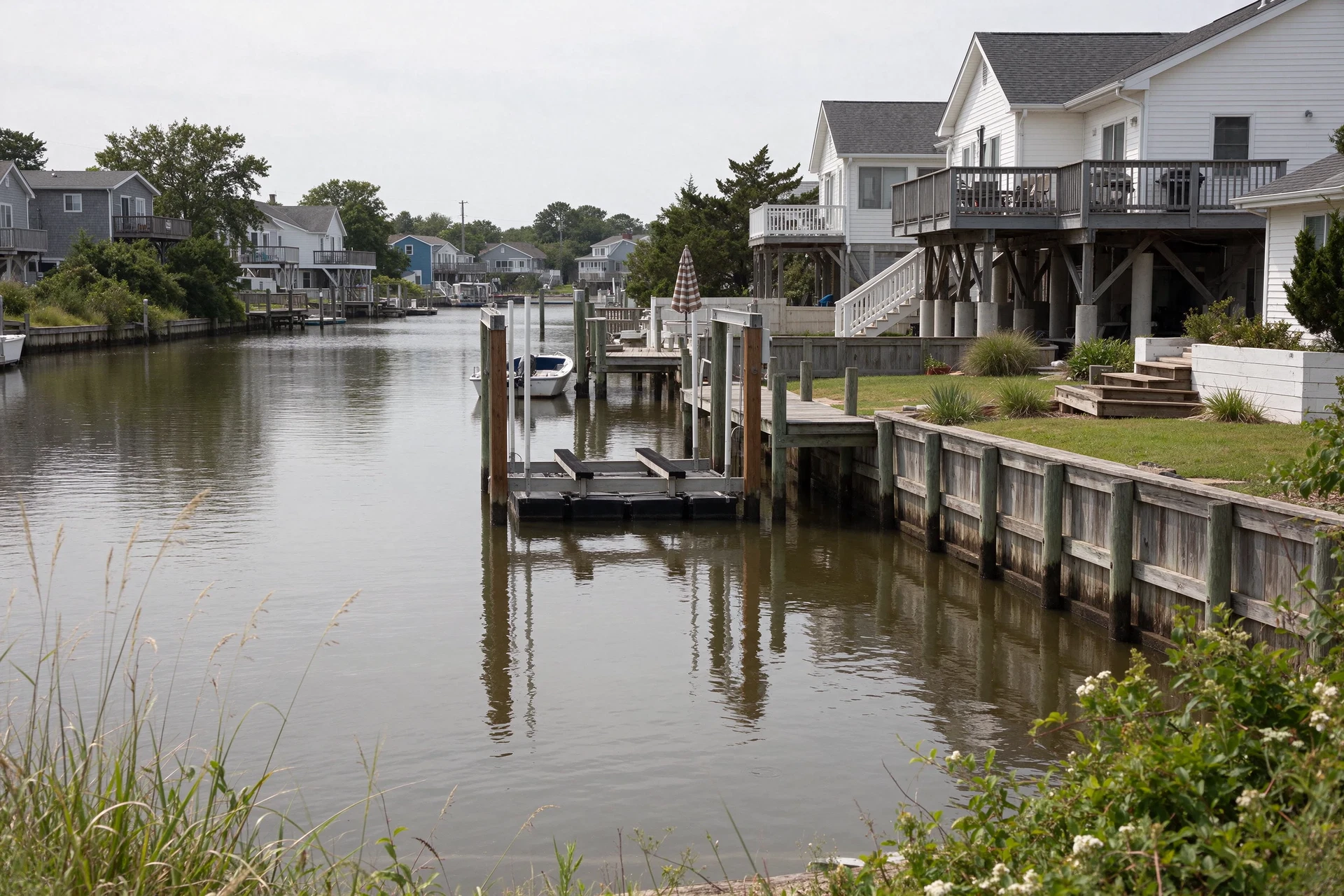
Beach Haven West is built around lagoons, and a lot of the appeal is having the water right behind the house. That also means your property line sits on a wall of wood, vinyl or steel that holds the yard in. Before you buy, it is worth understanding what that wall is doing.
What we can and cannot say about a bulkhead
A home inspection looks at the visible condition of the bulkhead. We note leaning, bowing, gaps, missing boards or panels, rusted hardware, sinkholes behind it and soil washing out through joints. We are not marine engineers. If we see signs of movement, the right next step is a quote from a marine contractor, ideally before the end of your attorney review.
Signs of trouble
- A bulkhead that leans toward the water or has a visible bow.
- Holes or dips in the lawn or patio close to the edge.
- Gaps between the cap and the panels, or panels that no longer line up.
- Rusted tie rods and fasteners, or cracked vinyl.
Docks, lifts and the waterfront electrical
Docks wear fast. We look at decking, framing, pilings and connections to the bulkhead. Electrical service to docks and boat lifts needs special attention because water and power are a hazardous combination. We look for ground-fault protection, weatherproof boxes and wiring that looks improvised.
The house itself
Grade and drainage
Waterfront lots tend to be flat and low. We watch how water leaves the property after a rain and whether gutters, downspouts and grading push it toward the lagoon or toward the foundation.
Crawl spaces and elevated homes
Many homes here are raised or sit over crawl spaces, so we look at piers, framing, insulation, vapor barriers and any marks showing earlier flooding. Flood zone status affects insurance and what you can rebuild, so ask your agent and insurer early. Our post on closing up a Long Beach Island house for winter explains what we check under raised homes.
Moisture and air
Waterfront homes live in humid air, which helps mold and musty odors take hold. If you notice either, our post on mold testing in Ortley Beach goes through when a test is worthwhile, and radon testing applies to homes with a lower level or slab, too.
Plan the order of your inspections
For a waterfront purchase, we suggest starting with the general home inspection, adding termite and wood-destroying insect work, and bringing in a marine contractor if the bulkhead looks questionable. If the property has a pool, read our Toms River pool inspection post as well.
Questions to ask before you buy
When was the bulkhead built or last repaired, and are there records? Has the seller replaced the cap, panels or tie rods? Is flood insurance required, and what does it cost? Answers shape how much risk you are taking on. Marine work can be a major expense, so it is better to know the number during your review period than after closing.
Maintenance that pays off
Keep soil from washing out through joints, fix small gaps early, and avoid heavy loads right at the edge. Check after each major storm. Catching a small problem usually means a small repair.
Insurance, permits and who to call
Work on a bulkhead often needs permits, and marine contractors book up in spring and summer. If the inspection raises questions, start that conversation early. Your attorney can tell you how repair costs should be handled in the contract, and your insurer can explain what is and is not covered if the wall fails.
We inspect homes in Beach Haven West, Manahawkin, Stafford, Tuckerton and across Long Beach Island. Call or text Ted at 609-312-6035.