
If you are buying in Manahawkin or anywhere else in Stafford Township, the termite report is one of the first things your lender and attorney will ask about. It is also one of the least understood pieces of paper in the whole transaction. Here is what the inspection actually covers, what we look for around bay-side homes, and how to read the result.
What a termite inspection really is
The formal name is a wood-destroying insect inspection, or WDI. It covers subterranean termites, but also carpenter ants, carpenter bees and wood-boring beetles. The goal is simple: find active insects or evidence of past damage in the parts of the house you can see and reach, and write it down in a form a lender can accept.
It is not a guarantee that a house is free of termites. A WDI inspection is visual and non-invasive, so nobody opens finished walls. What it gives you is a documented look at the high-risk areas on the day of the visit. Read more about how we handle these visits on our termite inspection page.
Why Manahawkin homes deserve a close look
Stafford Township sits between the bay and the Pine Barrens. That mix means a lot of wooded lots, high moisture in the ground, and plenty of homes built close to grade. Termites need moisture and a path to wood, and those conditions give them both.
Wood that touches soil
Deck posts, porch steps, fence boards and lattice that sit directly in the ground are the easiest way in. In older Manahawkin neighborhoods we often find stair stringers resting on dirt or mulch piled against siding.
Crawl spaces and low framing
Many homes here have shallow crawl spaces. Poor ventilation, a torn vapor barrier or a slow plumbing leak keeps the wood damp, and damp wood attracts insects long before it rots. If you are curious how moisture ties into the rest of the house, our mold testing page explains the overlap.
Stumps, firewood and old forms
Leftover wood in the soil next to a foundation, such as construction scraps or an old tree stump, feeds colonies right beside the house. We see this more on lots that were cleared and built on in stages.
What we look for on site
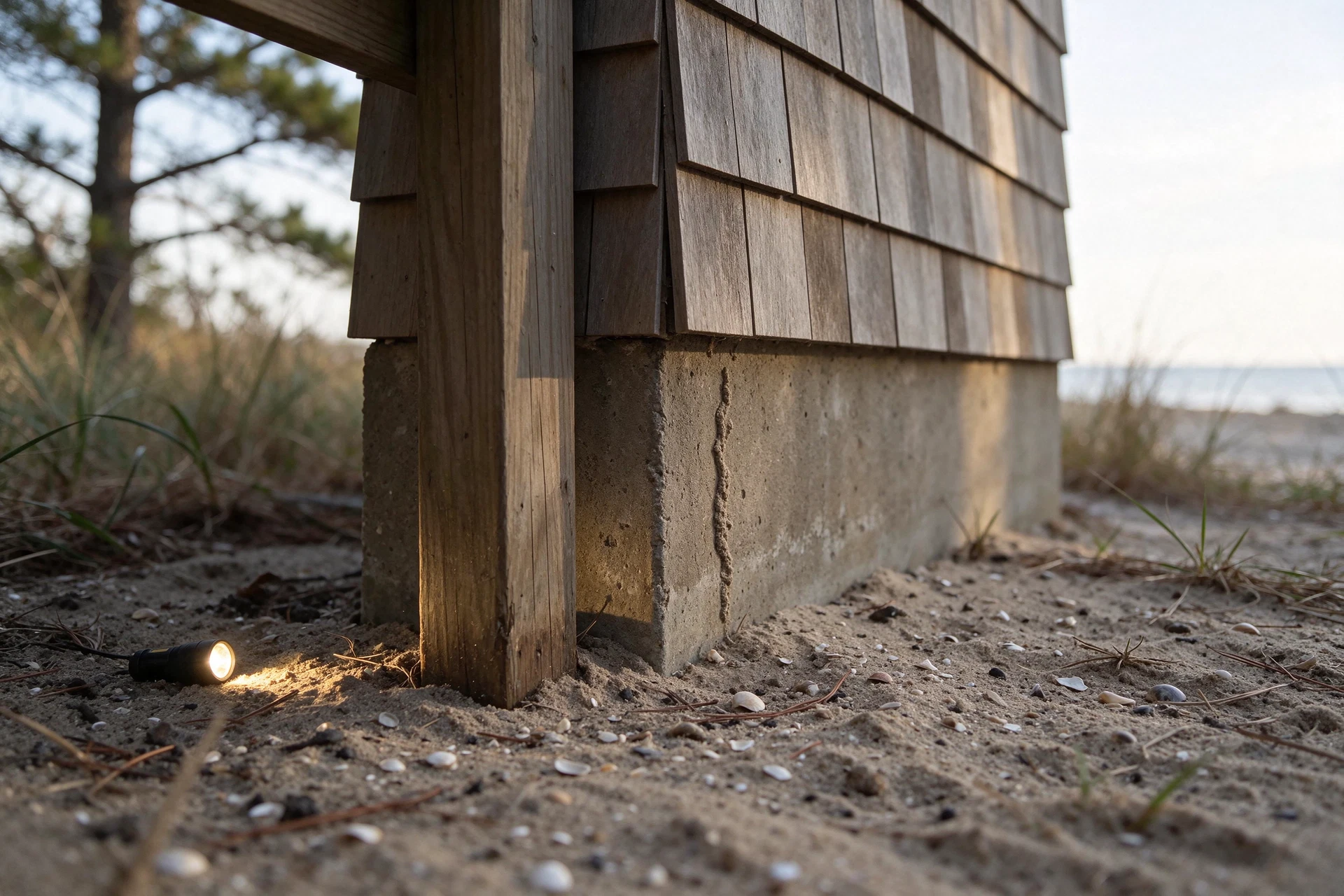
We start outside and work in. Outside, that means mud tubes on foundation walls, soft or hollow-sounding trim, and wood-to-soil contact. Inside, we check the basement or crawl space, sill plates, floor joists, window sills and door frames, plus the garage and any attached sheds.
Signs we write up include:
- Pencil-width mud tubes running up concrete or block.
- Discarded wings near windows or doors, which can point to a recent swarm.
- Sawdust-like frass pushed out of small holes, common with carpenter ants and powderpost beetles.
- Blistered paint, sagging floors or wood that sounds hollow when tapped.
Ted Kielb holds a New Jersey pesticide applicator license, which matters here because he understands how treatment works and can explain what a given finding means before you call a pest company.
Reading the result
A clean report is good news, but it is a snapshot. A report that finds old damage with no live activity is common in houses over twenty years old, and it usually leads to a repair estimate rather than a deal-breaker. Active activity is a bigger conversation. In that case we suggest you get a written treatment proposal from a licensed company before the attorney review period ends, so you can negotiate with real numbers.
Whatever the report says, keep it. Lenders, insurers and future buyers all like to see it.
Making it part of the full inspection
Most buyers pair the WDI with a general inspection so the same person sees the roof, drainage and framing together. Water patterns tell a story that a single-purpose visit can miss. You can read about the broader visit on our home inspection page.
If you are also thinking ahead to the off-season, our post on closing up a Long Beach Island house for winter covers the moisture habits that keep insects away over the cold months.
Buying in Manahawkin, Beach Haven West, Barnegat or the surrounding towns? Call or text Ted at 609-312-6035 and we will find a time that fits your contract dates.