
Many homes in Point Pleasant, Brick and the surrounding towns were first heated with oil, and plenty of them have since switched to gas. Sometimes the old tank was removed. Sometimes it was left in the ground, or simply forgotten. A tank sweep is how you find out before the problem becomes yours.
Why buried tanks matter
A steel tank that has been underground for decades can rust through. If it leaks, the soil around it can be contaminated, and cleanup can be expensive. In a sale, the responsibility often lands on whoever owns the property when the tank is found. That is why many buyers and lenders want to know up front.
What a tank sweep is
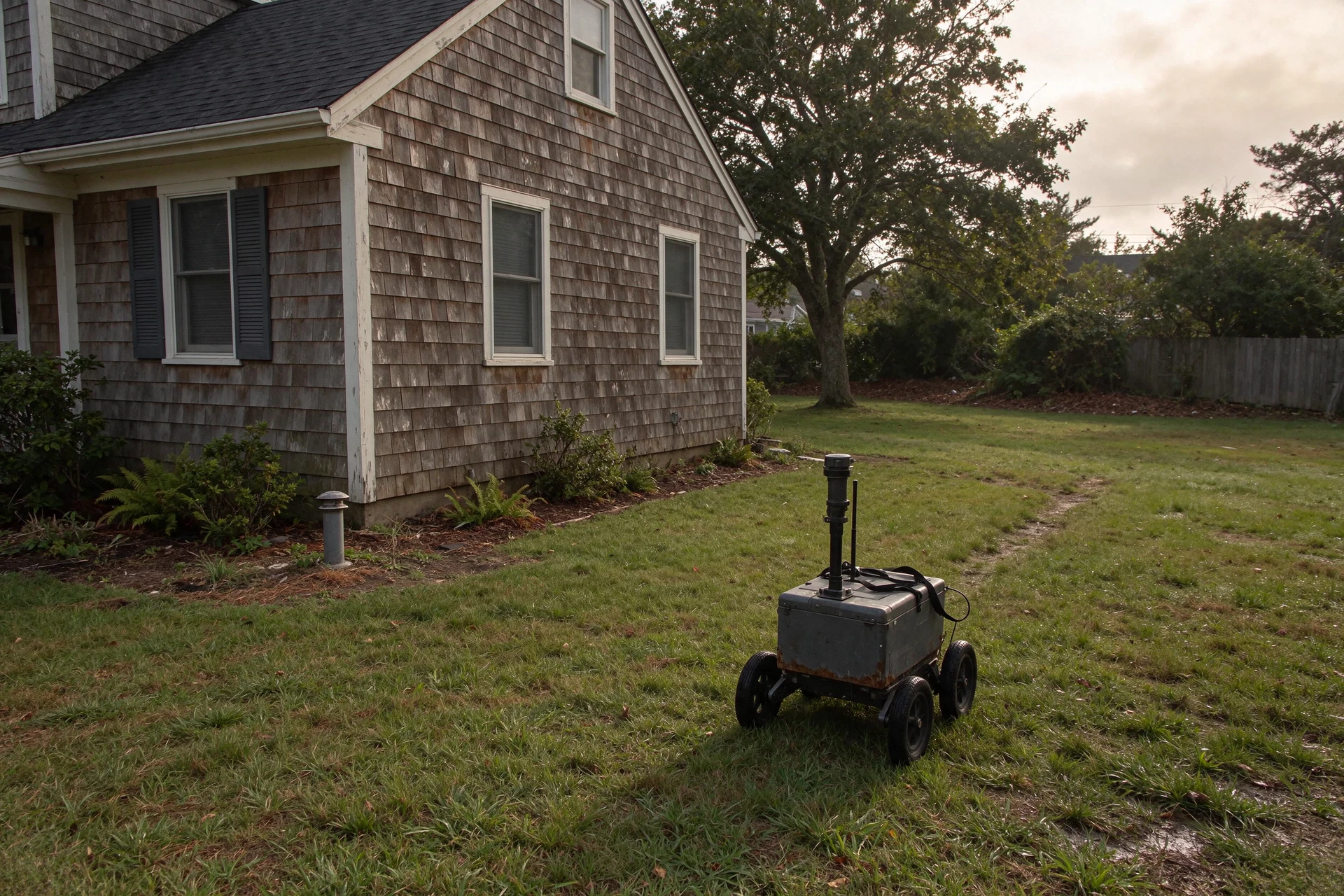
A sweep is a non-invasive search of the yard for evidence of a buried tank. We use a metal detector and, where the site calls for it, ground-scanning equipment to look for a large metal mass and the lines that once ran from it. We also look at the house for clues, because the building often tells the story before the ground does.
Clues above ground
Fill pipes and vent pipes sticking out of the lawn or the foundation, patched holes in the basement wall, old oil lines going into the floor and a furnace that was converted to gas are all hints. Even if the yard looks clean, a patched-over fill pipe is worth following up.
Clues below ground
The scan picks up large metal objects and disturbed soil. A positive signal does not automatically mean a tank, since buried debris can read similarly, so we note the size and shape and explain what the reading suggests.
What the results can say
Three outcomes are common. No sign of a tank gives you peace of mind and a documented report. A confirmed tank that is in use or has been properly closed calls for paperwork showing how it was handled. A suspected abandoned tank calls for a licensed contractor to confirm and, if needed, remove it and test the soil.
A sweep is not a soil test and it cannot tell you whether a tank has leaked. It tells you whether there is something to investigate. Removal and any cleanup are done by licensed contractors, and the attorney handling your sale should be told about any findings promptly.
When it makes the most sense
The age of the neighborhood is the best guide. Houses built before the 1970s are the most likely to have started on oil. If the home has been renovated or converted to gas, ask the seller for any records. You can see how we handle these searches on our tank sweep page.
These searches pair well with a full home inspection, because an older house tends to have older systems too. Our post on inspecting older cottages in Point Pleasant Beach covers wiring, additions and foundations, and buying a Victorian in Cape May looks at historic wood-frame homes.
What sellers and buyers can do
If you are selling, a sweep before listing lets you deal with a tank on your own schedule rather than during a buyer's inspection period. If you are buying, ask for any records of tank removal or closure and keep them with your closing documents. A seller who can show paperwork saves everyone time.
Why we do it as part of the visit
Because we are already on the property for the inspection, adding a sweep is easy to schedule and lets us connect what we see in the basement with what is in the yard.
We sweep properties in Point Pleasant, Point Pleasant Beach, Brick, Toms River and the surrounding towns. Call or text Ted at 609-312-6035.