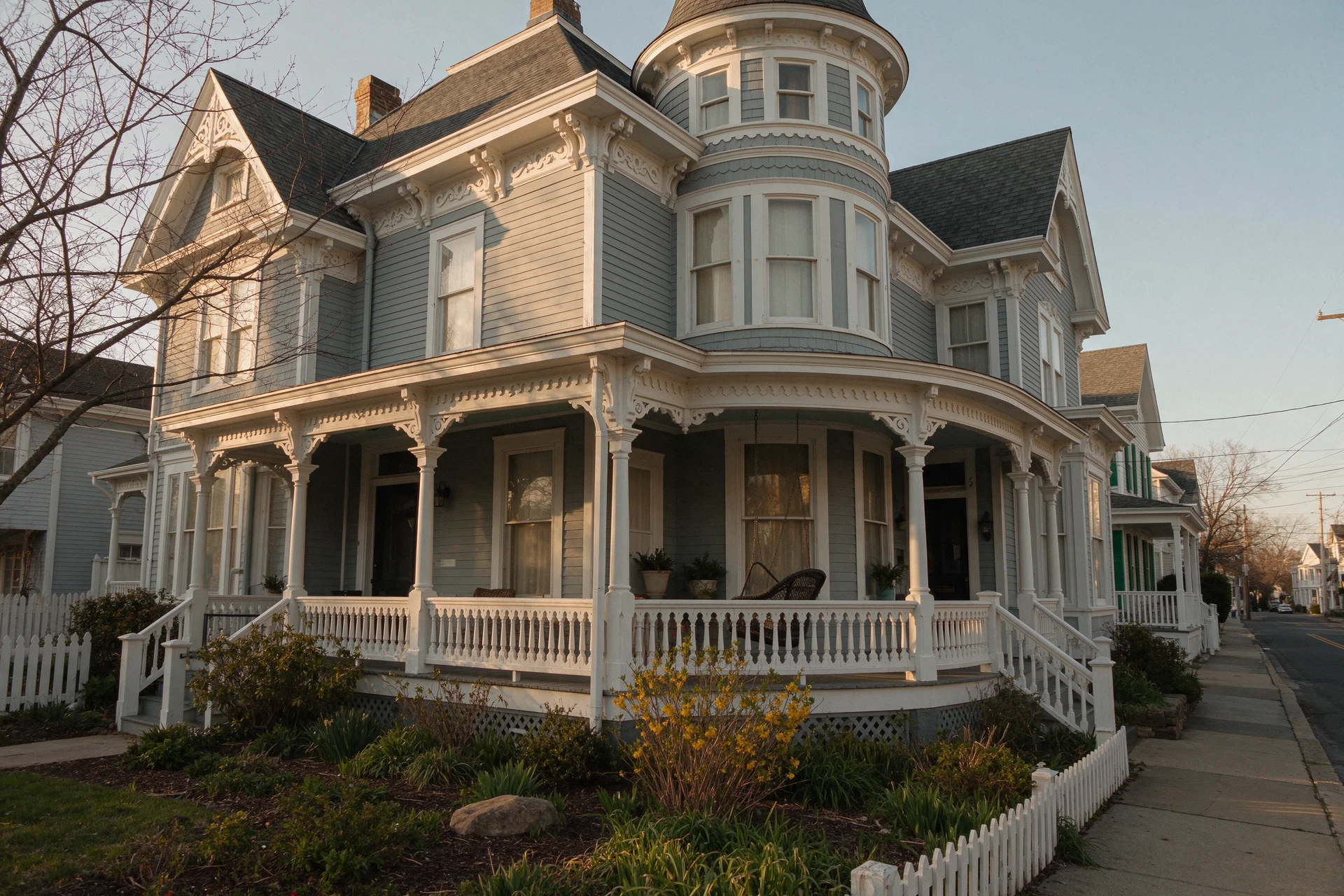
Few places in New Jersey look like Cape May. The painted Victorians, deep porches and decorative trim are the reason many buyers fall in love. They are also the reason a general inspection of one of these houses takes a bit longer.
Wood, paint and trim
Most Victorians in the area are wood frame with wood siding and ornate trim. Wood in a coastal climate needs a good paint film, and trim details trap water. We probe suspect areas where it is safe to do so and note soft wood, open joints and failing paint, especially at porch columns, brackets and window sills.
A note on old paint
Homes built before 1978 may have lead-based paint. We do not test for it in a standard inspection, but we point out chipping and peeling paint so you can plan for safe repair methods, especially if children will live there.
Porches, balconies and railings
Porches take the worst of the weather. We check floor boards, framing, posts and their bases, railings and stairs. Railing height and spacing on older porches often do not match modern safety standards, and a wobbly rail is a safety item we always report.
Roofs, turrets and flashing
Complex rooflines mean many valleys, dormers and transitions. Each one is a place where flashing can fail. Turrets and bay windows have curved or angled roofs that are harder to repair. We look at roof coverings, flashing, gutters and any ceiling stains below that hint at past leaks.
Foundations, crawl spaces and moisture
Cape May is low and close to the water, so a damp crawl space is common. We look at the piers or foundation walls, floor framing, insulation, drainage and any signs of earlier flooding. Wood that stays wet invites rot and insects, so a termite and wood-destroying insect inspection is a sensible companion.
Systems that were added later
Plumbing, wiring and heating were retrofitted into houses that were built without them. That can mean mixed wiring types, long pipe runs and ducts squeezed into odd spaces. Many owners also add air conditioning, and we check how it was installed and whether it fits the house.
Take the history seriously
If the house is in a historic district, changes may need approval, and that affects how and when you can fix what we find. Your attorney and local officials are the right people for that question. For older homes elsewhere in the region, read about older cottages in Point Pleasant Beach and buried oil tanks.
Questions to ask the seller
Ask when the roof, porch and paint were last done, whether any structural work was permitted and whether the property has flooded. Request records of maintenance and any contractor invoices. Older houses with a clear paper trail are easier to trust.
Plan for upkeep
Owning a Victorian is a relationship. Budget for painting every few years, regular roof and porch checks and a yearly walk around the exterior with a screwdriver in your hand. A small repair done early is cheap, and the same repair done late can be expensive.
Insurance and flood zones
Cape May sits low, and many houses are in flood zones that affect insurance cost. Get quotes before you commit. Insurers may also ask about wiring, roof age and the type of heating, so the inspection report can help you answer those questions accurately and avoid delays near closing.
A Cape May house is a long-term commitment, and a thorough inspection is the best way to start. Read about our home inspection process. We serve Cape May, Wildwood, Villas, Rio Grande and Avalon. Call or text Ted at 609-312-6035.