
What a WDI inspection covers
WDI stands for wood-destroying insects. Termites are the familiar concern, but this inspection category also includes carpenter ants, carpenter bees and certain wood-boring beetles. The purpose is to document visible evidence and associated damage in readily accessible areas, rather than judge a house by its finishes alone.
You may also encounter WDO, meaning wood-destroying organisms. That broader term can include wood-decay fungi. If a lender or contract requests a WDO report, confirm the required scope and paperwork before scheduling. A termite/WDI inspection is not automatically a mold or fungal-decay assessment.
Clues in accessible timber
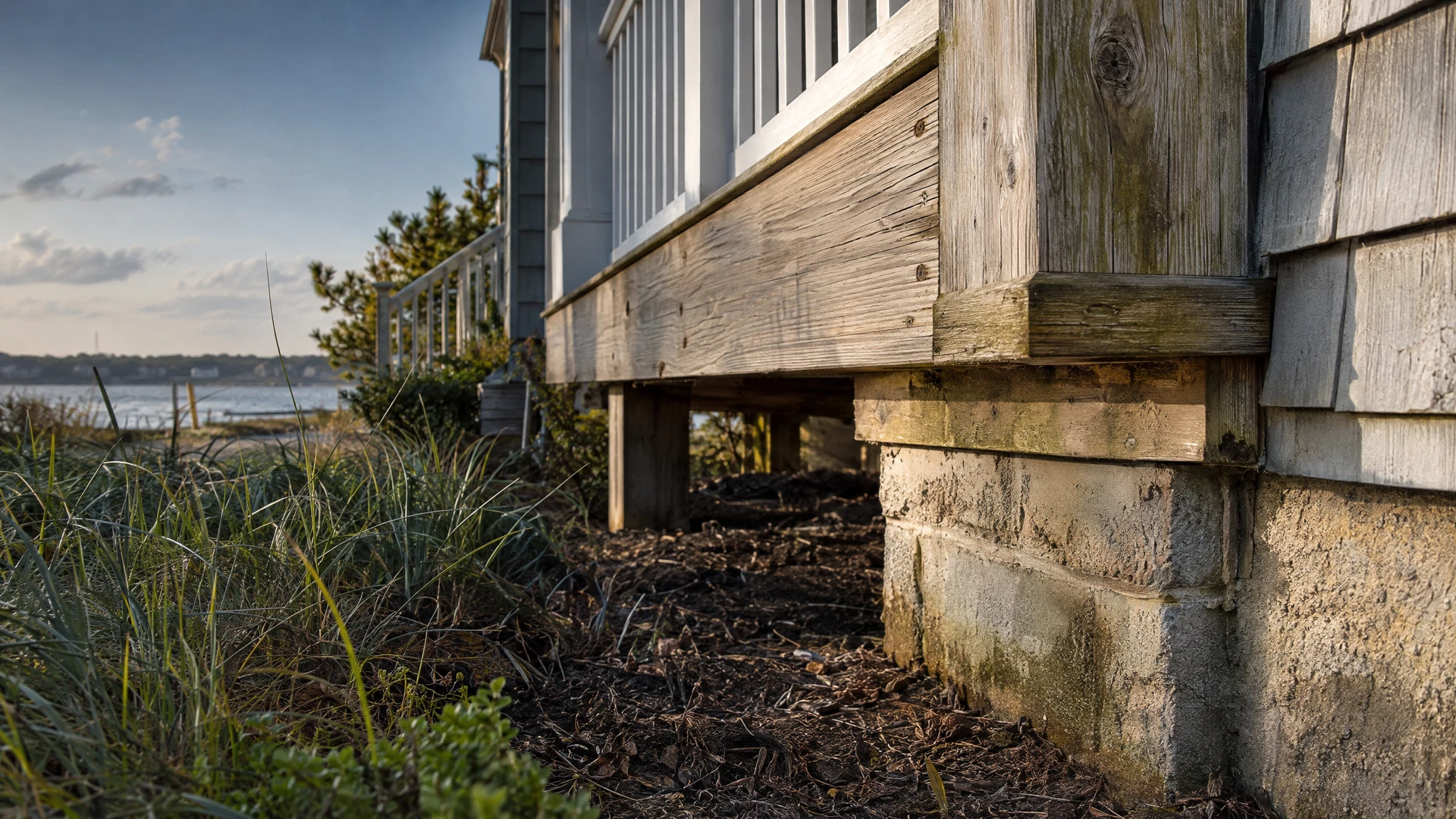
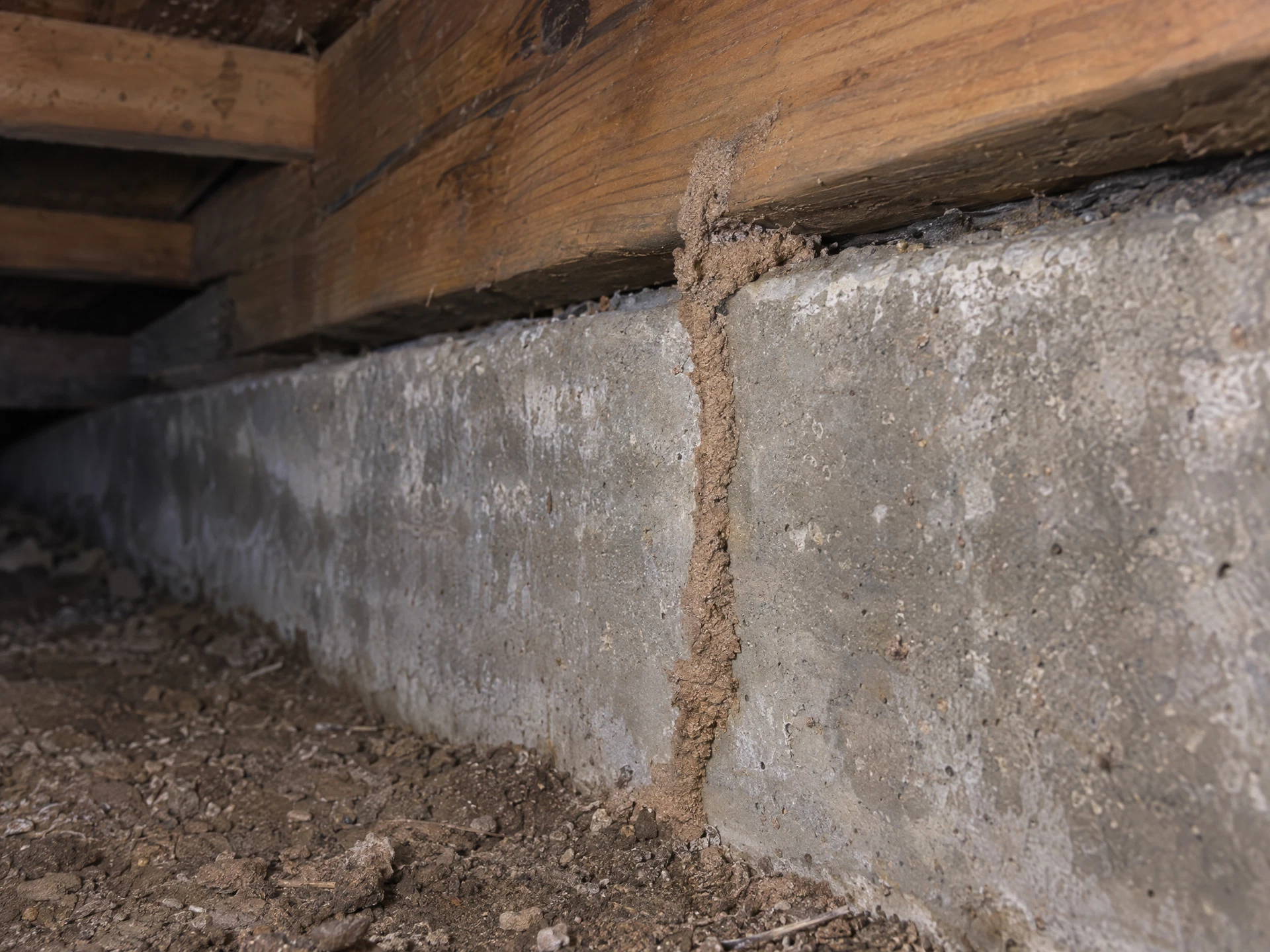
Exposed floor framing, accessible crawlspace wood and visible foundation edges can offer useful clues. Shelter tubes running up masonry, discarded insect wings or damaged wood warrant closer attention. Evidence is recorded where it is found; a mark on one joist does not establish the condition of every concealed member nearby.
Termites often remain inside soil, shelter tubes or the wood they feed on. Not seeing a swarm does not rule them out. Equally, suspicious-looking damage is not a reason to assume an active infestation without evaluating the evidence and any available treatment history.
Moisture deserves attention
A leaking pipe beneath a bathroom or a downspout emptying beside the foundation can keep nearby wood and soil damp. Wood touching soil and timber debris beneath a house also create conditions that deserve attention. These observations help owners understand vulnerabilities; moisture alone is not proof of termites.
For a shore home, look beyond the rooms used during summer visits. Before the appointment, arrange access to crawlspace and attic entrances and move stored belongings away from exposed framing where practical. Share previous pest reports, treatment records and details of known leaks. Do not remove building materials to prepare for a visual inspection.
Where the inspection stops
Finished walls, insulation, flooring and blocked or unsafe spaces can conceal infestation or damage. A visual inspection does not open those assemblies. Access limitations matter as much as findings: no visible evidence means none was observed in the areas inspected on that date, not that every hidden space is insect-free.
Inspection is not treatment
New View's role is inspection, not pesticide application or repair. Findings help you decide what needs further attention. Evidence of infestation may call for evaluation by a licensed pest-control professional; questions about the extent of damaged framing may require a qualified structural professional. A WDI report does not establish the full extent of structural damage or guarantee protection against future activity.
New View provides full-color photos, clear descriptions and summaries, with reports delivered within 24 hours. Use the report to identify which accessible area showed evidence and which areas could not be examined. When reviewing findings during a purchase, discuss follow-up evaluations before making assumptions about treatment needs or the amount of wood that may require repair.