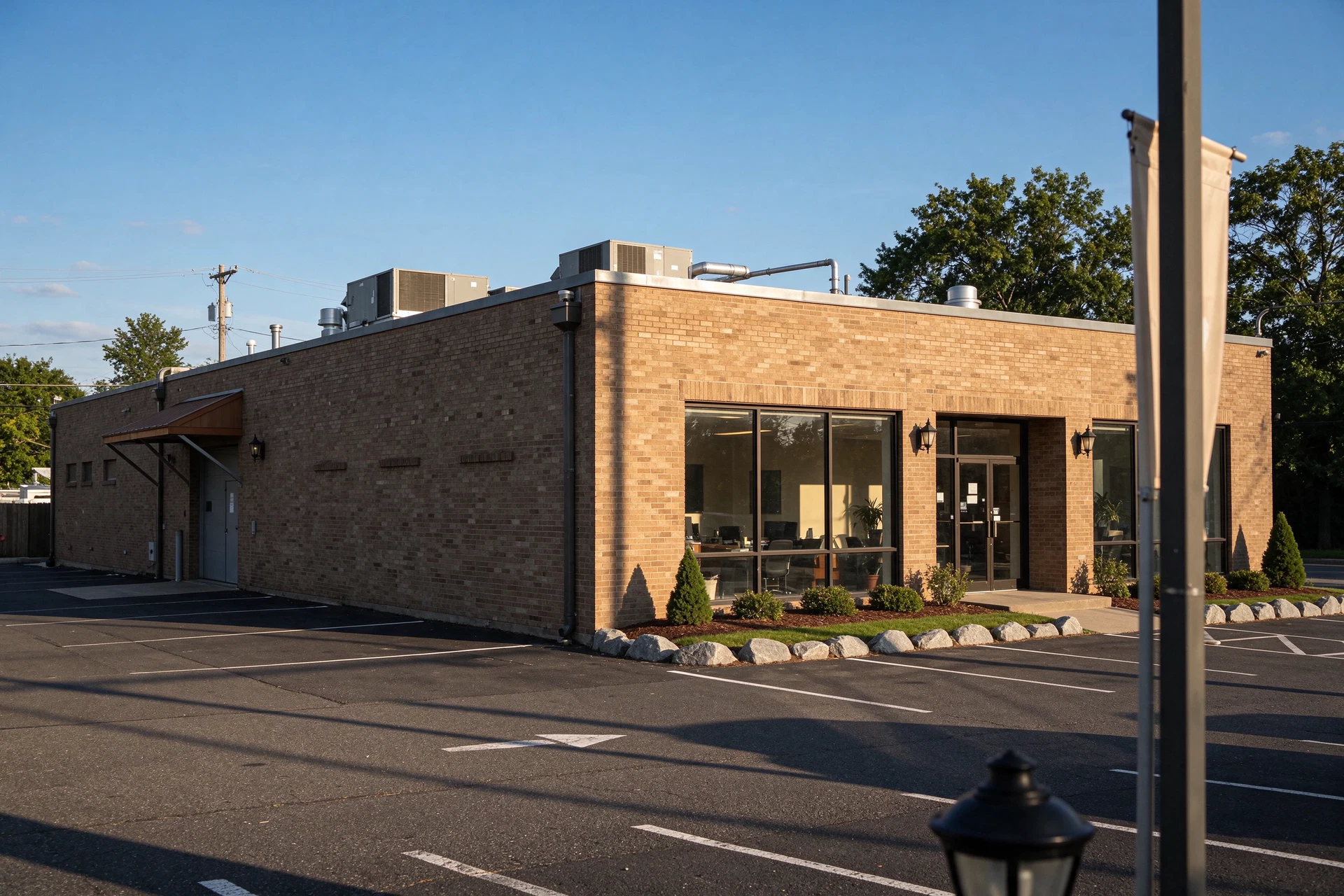
Small commercial buildings are a big part of what makes Ocean County work: the strip of shops, the dental office, the two-story building with a business on each floor. When you are buying or leasing one, the inspection looks a bit different from a house. Here is how.
What stays the same and what changes
The basics are familiar: roof, structure, electrical, plumbing, heating and cooling, and the exterior. The scale and purpose are different. A commercial space has larger electrical loads, multiple tenants, rooftop equipment, more plumbing fixtures and a need to meet the demands of customers and employees.
What we look at
Roof and rooftop equipment
Many small commercial buildings have flat or low-slope roofs. We look at the membrane, seams, drainage, flashing and the curbs around rooftop units. Ponding water and patched areas hint at repeated leaks. We also note the age and condition of the heating and cooling units, since replacing them is a large expense.
Structure and exterior
We look at foundation, floor and wall conditions, cracks, loading areas, canopies, doors, windows, paving and drainage in the parking lot. Water that sits against a wall causes slow damage that shows up years later.
Electrical and plumbing
We look at service size, panels, visible wiring and the condition of the main systems. Tenant spaces are often altered, so we pay attention to extension cords, added circuits and visible plumbing that was changed without much care.
Interior and common areas
Ceilings, floors, restrooms, stairs, exits and lighting in shared spaces are checked for obvious defects and safety concerns.
What an inspection does not replace
A visual inspection is not a code compliance review, a zoning or accessibility study or an environmental assessment. Larger or specialized properties may need an engineer, a roofing contractor or a separate environmental study. We tell you where we think that is the right call, and which items to take to your attorney and lender.
How to prepare
- Ask for access to the roof, mechanical rooms, electrical panels and all tenant spaces.
- Request maintenance records, recent roof or HVAC invoices and any prior reports.
- Tell us how you plan to use the building so we can focus on what matters.
Part of a bigger picture
Commercial inspection is one of several types we offer, and our types of inspections page explains the rest. If you are buying a property to rent out, read inspecting an Ocean City rental before you buy. And if you only need a targeted look at a specific system, see partial inspections in Lacey Township.
Leases and tenants
If you are leasing instead of buying, the inspection helps you understand which repairs fall on the landlord and which fall on you. Ask your attorney to review the lease against the findings. If tenants occupy part of a building you are buying, plan the visit ahead so they are not disrupted.
Why a local inspector helps
Knowing how coastal weather, salt and sandy soil affect commercial buildings in this area helps us spot problems that a generic checklist can miss. Ted spent years in construction before becoming an inspector, and that background shapes how he reads a building.
Timing and reports
Most small commercial inspections take longer than a house, so we plan the time ahead and coordinate access with owners and tenants. You get a written report with photos within 24 hours of the visit, organized by system so you can pass the right sections to your attorney, lender, roofer or HVAC contractor.
If the building has a basement or lower level, radon testing is also worth adding. We inspect in Toms River, Brick, Manahawkin and across the area. Call or text Ted at 609-312-6035.