
A shore house that sits empty from November to April asks for a little attention before you lock the door. Most of the damage we find in off-season homes on Long Beach Island is not dramatic. It is a slow drip, a damp corner or a vent that let the weather in. A short checklist done in an afternoon prevents most of it.
Start with the water
Water is the first thing to deal with, because it does the most harm when nobody is around to notice.
Shut off or protect the supply
If the house will be fully closed, shut the main supply, open the lowest faucets and drain the lines. Drain or winterize the outdoor shower and the hose bibs as well. A split fitting under a house with no one in it can run for weeks.
Check the water heater and traps
Turn the water heater off or to vacation mode, and pour a little plumbing antifreeze into toilets and drain traps if the house will be unheated. Salt air is hard on metal, so look at the base of the heater and any exposed fittings for rust or weeping.
Look at the outside edges
Bayfront and oceanfront homes take wind and salt spray all winter. Walk the property and look up before you leave.
- Gutters and downspouts clear and pointed away from the foundation.
- Loose siding, trim or flashing that a nor'easter can lift.
- Roof shingles that are curled, cracked or missing near ridges and edges.
- Stairs, railings and decks with soft or loose boards. Our earlier post on exterior lighting also covers keeping paths safe when you return after dark.
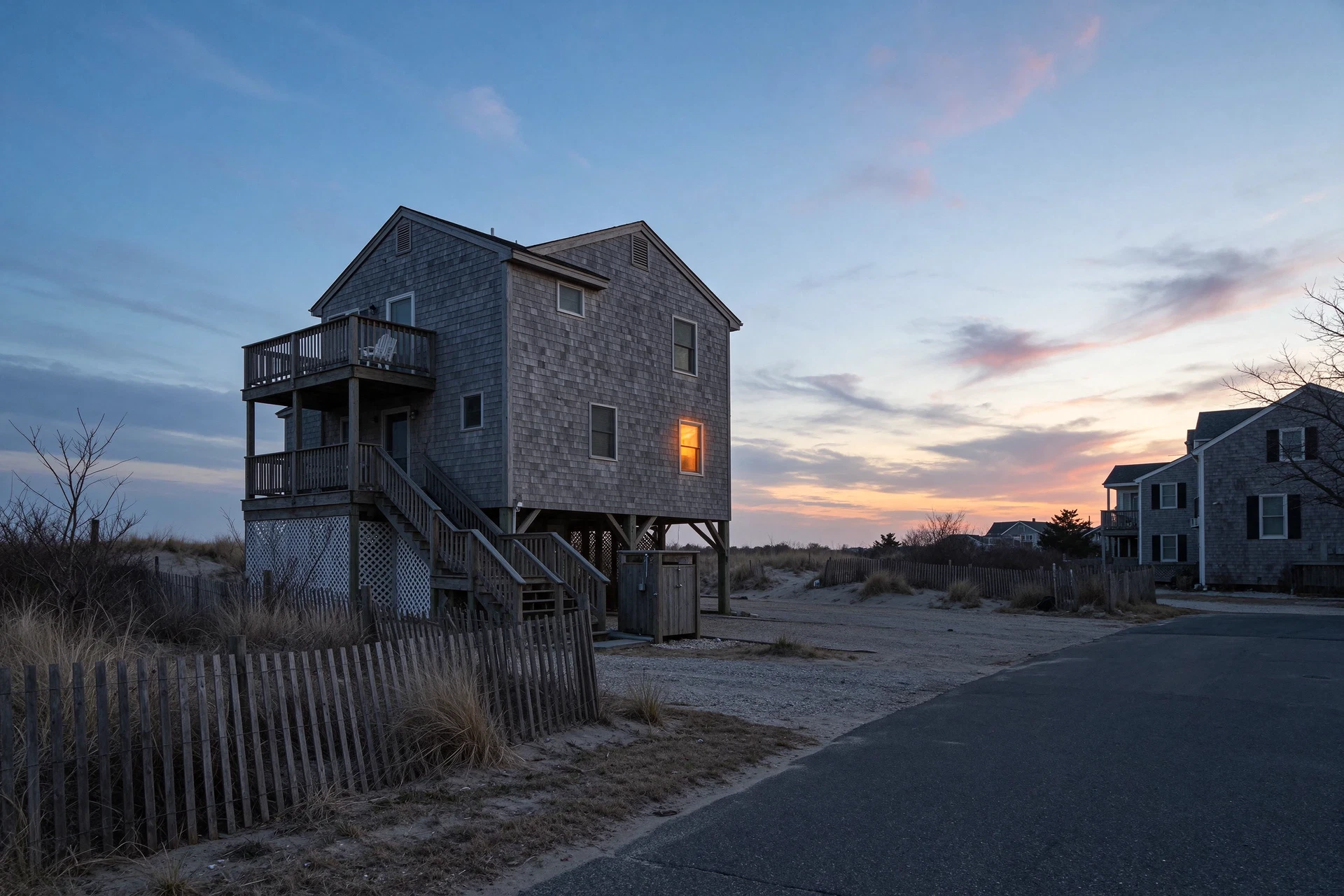
On elevated homes, check the pilings, bracing and the area under the house. Debris, stored lumber and old cardboard under there invite moisture and pests.
Keep the inside from going stale
A sealed house with no airflow can smell musty by spring. A few small habits help a lot.
Humidity and mold
Leave interior doors and closet doors open so air can move. If you can, run a small dehumidifier on a timer or plan to have someone check on the house after heavy storms. Look for dark spots on ceilings, window corners and the back of closets. If you do find a stubborn musty smell, our mold testing and indoor air quality testing services can tell you what is actually in the air instead of guessing.
Appliances and electrical
Empty and prop open the refrigerator, unplug small appliances and turn off the breakers to anything you will not use. If you do leave the refrigerator running, our post on setting your refrigerator is a good reminder of the right temperature.
Do not forget pests
Mice find empty houses quickly, and moisture-loving insects follow. Seal gaps around pipes, store food in sealed containers or take it with you, and keep firewood and lumber away from the structure. If you are buying instead of closing up, our post on termite inspections in Manahawkin explains what to watch for around the foundation.
Plan a spring walk-through
When you reopen the house, check the ceilings, the area under sinks and the crawl space before you turn the water back on. If anything looks different from last fall, a home inspection can document it and give you a punch list before the season starts. Details are on our home inspection page.
New View serves Long Beach Island from Barnegat Light to Holgate, along with Ship Bottom, Surf City, Beach Haven and the mainland towns. Call or text Ted at 609-312-6035 if you would like a second set of eyes on your shore house.