A pool can be a great reason to buy a house in Toms River, or an expensive surprise. Sellers often keep the water clear and the deck swept without anyone knowing what is going on under the surface. A pool inspection helps you see the whole system.
What a pool inspection looks at
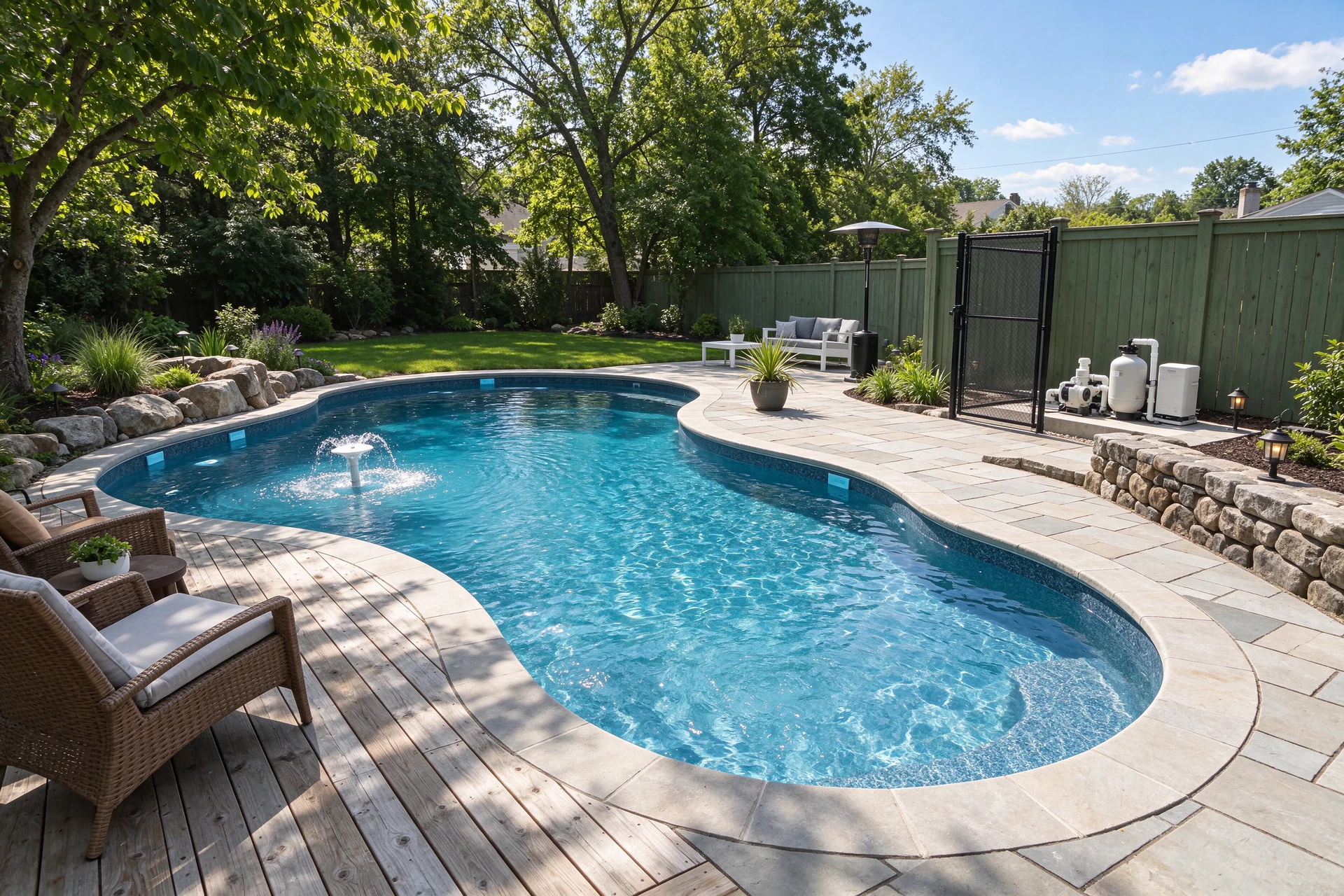
We treat the pool as a system with four parts: the shell and surfaces, the equipment, the safety features and the area around it. We inspect what can be seen and operated safely. We do not drain the pool or test for leaks underground, but we note signs that point to one.
The shell and surfaces
Vinyl, fiberglass or concrete
Each type fails in its own way. Vinyl liners wrinkle, fade and tear. Fiberglass can show surface cracks or discoloration. Concrete and plaster finishes develop rough patches, stains or hollow spots. We note the condition and what it may cost to fix.
Decking and coping
Cracks, heaving pavers and loose coping stones are tripping hazards and can let water get behind the pool edge. We check for settlement, pooling water and drainage that slopes toward the pool.
The equipment pad
Pumps, filters, heaters, chlorinators, valves and electrical connections live here. We check that the equipment runs, looks for leaks, corrosion and noisy bearings, and notes the age of each item. A heater or pump near the end of its life is not a reason to walk away, but it belongs in your budget.
Safety features
This is where we spend extra time. Fences and gates need to be in good repair, and gates should close and latch on their own. We look at door alarms, covers, ladders, rails, drain covers where visible and electrical bonding and grounding that can be seen at the equipment. Anything that looks unsafe goes in the report as a priority item.
The things you cannot see
A pool that loses water faster than evaporation can point to a leak in the shell or plumbing. If the seller can show you records, ask for them. Tell us what you notice at the showing, since a fresh liner, new paint on the coping or a recently resurfaced deck can all mean something happened.
Timing matters
Pools in New Jersey are often closed from fall through spring, which can limit what we can run and see. If you are buying in the off-season, ask whether the seller will have the pool opened for the inspection or whether a follow-up visit can be added. You can read more on our pool inspection page.
Where pools fit with the rest of the house
Water, humidity and chemicals affect more than the backyard. Salt and moisture wear on outdoor metal, which we cover in our post on salt air and coastal homes in Stone Harbor and Avalon. If your property sits along a lagoon instead, read buying a bayfront home in Beach Haven West to see what we check at the waterline.
Questions to ask the seller
How old are the liner or surface, the pump and the heater? When was the last time the pool was opened and closed, and by whom? Have there been any leaks, repairs or insurance claims? Written answers are better than memory, and they help us focus the visit.
What happens after the report
The report explains the condition of each part in plain terms and ranks what needs action. Some items can be negotiated with the seller, and others become your maintenance list for the first season.
Pair the pool inspection with a full home inspection so the same visit covers drainage, grading and the electrical service that feeds the pool. We inspect in Toms River, Brick, Manahawkin and nearby towns. Call or text Ted at 609-312-6035.