
Most buyers in Brick hear about radon late, usually when the attorney mentions it during review. It is an easy item to handle if you know what to expect. Here is how a test works, what the result means and what happens next.
What radon is and why it gets tested
Radon is a naturally occurring gas that comes from the breakdown of uranium in soil and rock. It moves up through the ground and can enter a home through slab cracks, sump pits, floor drains and gaps around pipes. You cannot see or smell it, so a test is the only way to know what is in a particular house.
Radon levels vary from one house to the next, even on the same street. A neighbor's result tells you very little about yours. That is why the test is done on the specific home you are buying or living in.
How the test is set up
Closed-house conditions
For a short-term test, windows and exterior doors stay closed except for normal coming and going, starting about twelve hours before the monitor goes down. Fans and systems that pull in outside air should be off. This keeps the reading from being thrown off by open windows.
Where the monitor goes
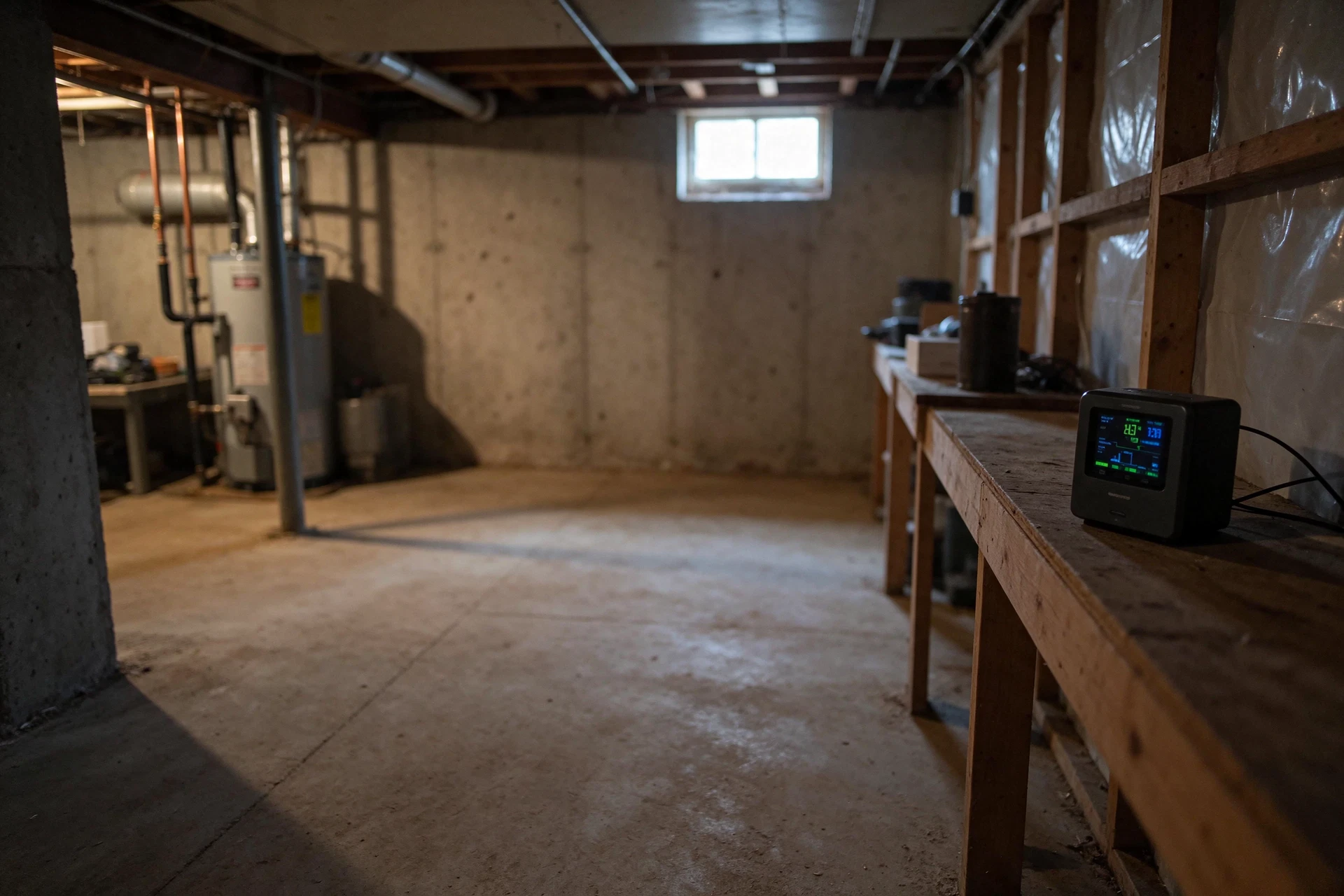
We place it in the lowest level that could be lived in, such as a finished basement or the main floor of a slab house. It sits away from drafts, humidity, exterior walls and the kitchen or laundry, at roughly breathing height.
How long it runs
A standard test runs at least 48 hours. The monitor records every hour, which lets us spot a reading that looks off, like a spike when a window was opened. Ted Kielb holds a New Jersey DEP radon measurement technician certification, so the placement and the paperwork follow the state's protocol.
Reading the result
Results are reported in picocuries per liter, written pCi/L. The EPA's action level is 4 pCi/L. If your average comes in at or above that number, the agency recommends fixing the problem. Between 2 and 4 is a gray area where some owners choose to act and others retest.
One short-term test is a snapshot. Weather, season and how the house is used all move the number. If the result is close to the line, a second test is a reasonable next step before anyone spends money.
If the number is high
A high result is common enough that fixing it is routine. The usual fix is a vent pipe and a small fan that draws gas from under the slab and releases it above the roofline. A licensed mitigation contractor will quote the work, and a follow-up test confirms it worked. In a sale, a buyer can ask for the system to be installed or for a credit, so it often becomes a negotiating point rather than a deal-breaker.
Where radon testing fits with the rest of the inspection
Radon is only one of several air and moisture concerns in a coastal house. If the basement also smells damp, read our post on musty smells and when to test for mold in Ortley Beach. If your house feels stuffy through the winter, indoor air quality testing in Barnegat covers what a general air test can find.
You can see exactly how we handle the visit on our radon testing page, and you can book it on its own or alongside a full home inspection.
Questions we hear most
Does a new house need a test? Yes, the same as an older one. Does a finished basement change things? It can, since a sealed room may trap more gas, which is why we test in the lowest lived-in space.
Buying or living in Brick, Bayville, Lanoka Harbor or anywhere nearby? Call or text Ted at 609-312-6035.